This is the TRAINING website.
For current info please visit detroitmi.gov

block-detroitminew-views-block-news-events-block-1,News & Events*block-detroitminew-views-block-related-links-block-1,Related Links*block-detroitminew-views-block-video-playlist-block-1,Videos*documents-block,Documents*block-detroitminew-views-block-forms-block-1,Forms*block-views-block-faq-block-1,FAQs*block-detroitminew-views-block-district-map-block-1,District Map*block-views-block-council-office-directory-block-1,Office Directory*block-detroitminew-views-block-contacts-block-3,Contacts*block-detroitminew-views-block-contacts-block-4,Contacts*block-detroitminew-views-block-council-member-bio-block-1,Bio*block-detroitminew-views-block-sub-sections-block-1,Sections*block-detroitminew-views-block-web-apps-block-1,Web Apps*block-detroitminew-views-block-news-events-block-4,News*block-detroitminew-views-block-news-events-block-3-2,Events*block-detroitminew-views-block-contacts-special-block-1,Staff*block-detroitminew-views-block-statements-block-1,Statements*block-detroitminew-views-block-newsletters-block-1,Newsletters*block-detroitminew-views-block-newsletters-block-3,Ordinance*block-detroitminew-views-block-newsletters-block-2,Resolutions*block-detroitminew-views-block-newsletters-block-4,Memos
The materials that comprise the exterior walls of buildings in Detroit’s local historic districts are character defining features of those structures that should be preserved. The predominant siding materials in a historic district (brick homes in Boston-Edison and wood siding Corktown, for example) help convey the unique architectural character of the districts. The removal or inappropriate replacement of exterior wall materials has a significant detrimental effect on a property’s and district’s historic integrity. The following document provides basic guidance for the appropriate treatment of the most common historic wall and siding materials, as well as links to additional information.
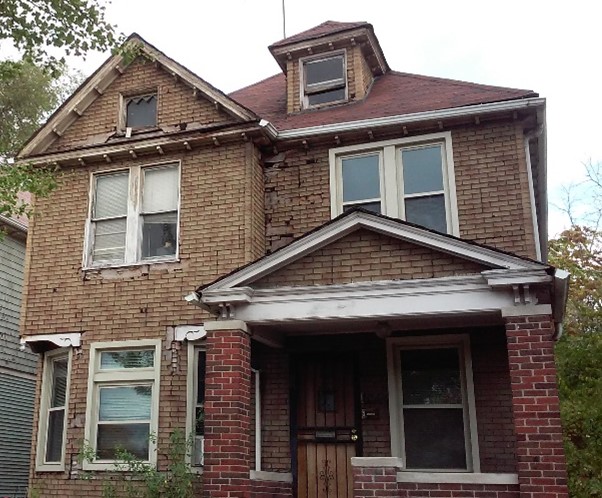
Brick is one of the most common exterior materials across all of Detroit’s historic districts. The aesthetics of brick walls vary greatly depending on the physical characteristics of bricks (size, color, texture, glazing) and the bond, or pattern, in which they are laid.
Brick structures were almost always left unpainted when constructed. Applying paint to previously unpainted brick structures is generally an inappropriate treatment and is rarely approved by the Detroit Historic District Commission. Painting brick obscures the original texture, color, and bond pattern of the masonry wall. Additionally, some paint and coating materials can cause accelerated deterioration of the masonry and mortar.
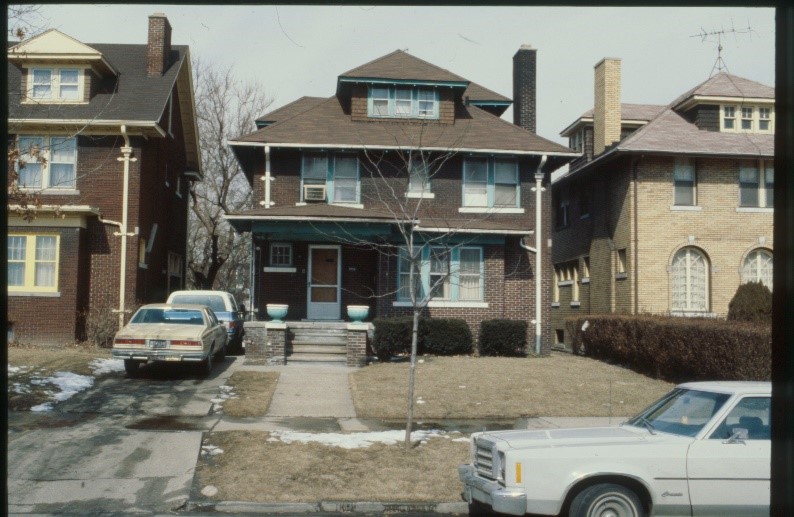
When altering or rebuilding masonry walls, the original bricks should be reused when feasible. Professional masons can clean the brick of existing mortar and surface debris to prepare them for new work. When new bricks are required, care should be taken to find units that match the original in terms of size, texture, and color. Reclaimed bricks can be found for resale at various salvage yards throughout the region. Contemporary brick manufacturers also produce bricks resembling those produced in the late 19th and early 20th centuries.
Brick surfaces may require periodic cleaning due to biological growth, graffiti, or staining due to other environmental factors. When cleaning brick, one should use the gentlest means possible in order to prevent permanent damage to the brick. High pressure power washing or aggressive, abrasive hand scrubbing can remove a brick’s durable exterior, or “fire skin,” and expose the softer interior. Inappropriate solvents or detergents can introduce harmful salts or chemicals into the porous brick and cause accelerated deterioration or staining (efflorescence). Details on appropriate cleaning methods for brick and stone can be found in the National Park Service’s Preservation Brief 1: Assessing Cleaning and Water-Repellent Treatments for Historic Masonry Buildings, as well as Preservation Brief 6: Dangers of Abrasive Cleaning to Historic Buildings.
Within Detroit’s historic districts relatively few residential buildings are clad entirely in stone. Stone and cast stone are primarily utilized as decorative accents around door and window openings within larger brick walls assemblies. Like brick, stone and cast stone should generally be left unpainted. When completing repairs, care should be taken to use an appropriate mortar that matches the original.
Stucco is a form of exterior plaster that is common throughout Detroit’s historic districts. Stucco, was traditionally prepared using lime as a binding agent, but lime was gradually replaced with Portland cement during the late 19th and early 20th centuries. Stucco can be applied directly onto a masonry substrate, but is usually applied to wood or metal lathe attached to the exterior wall. Stucco is traditionally applied in layers, and composition of the outermost layer dictates the finished texture and appearance of the material.
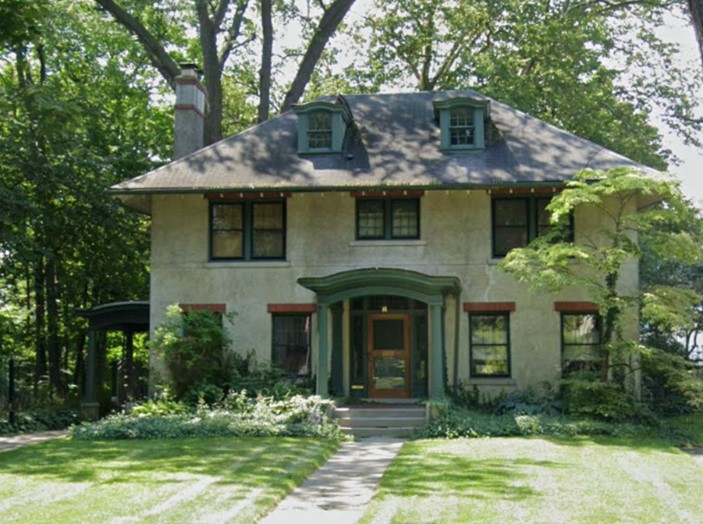
Original stucco should be repaired when possible, rather than replaced. Filling cracks in stucco with appropriate patching materials as they develop can help prevent larger losses in the future. The National Park Service’s Preservation Brief 22: The Preservation and Repair of Historic Stucco provides additional information on appropriate stucco treatments.
Mortar is the material that holds to together modular masonry construction (brick, stone, concrete block, hollow clay tile, terra cotta, etc). During the 19th century, mortar consisted of a mixture of lime and sand. Over the course of the 20th century, Portland cement was introduced to the mortar mixture and eventually became the primary binding ingredient. Beyond serving as the “glue” that holds masonry together, the material can play a large role in the aesthetic characteristics of masonry wall assemblies. Visual characteristics of the mortar are influenced by the aggregate (sand) and added color (tint), but also how the mortar joint is finished in profile. Mortar, by design, is a sacrificial material in most historic masonry wall assemblies, and periodic repair (repointing) of mortar joints is expected.
When altering masonry walls or repointing deteriorated joints, care should be taken to ensure that newly applied mortar matches the original in composition, color, and finish treatment (profile). If inappropriate mortar is applied to joints (if the cured mortar is harder or less porous than porous than the brick, for example), it can cause damage to the masonry. Filling deteriorated mortar joints with materials such as caulk or silicone sealants is never an appropriate treatment. For additional details, please see the National Park Service’s Preservation brief 2: Repointing Mortar Joints in Historic Masonry Buildings.
Wood is one of the most common siding materials found on residential properties in Detroit’s Historic Districts. The application of wood siding varies greatly, from entire homes covered in horizontal lap siding, to gable ends covered in wood shake or shingles, to outbuildings clad in board and batten siding. Over the course of the 20th century, many homeowners covered or replaced their wood siding with modern materials.
Wood siding of all types requires regular maintenance to prevent deterioration and eventual failure. Most importantly, wood siding requires painting or staining to protect it from the elements.
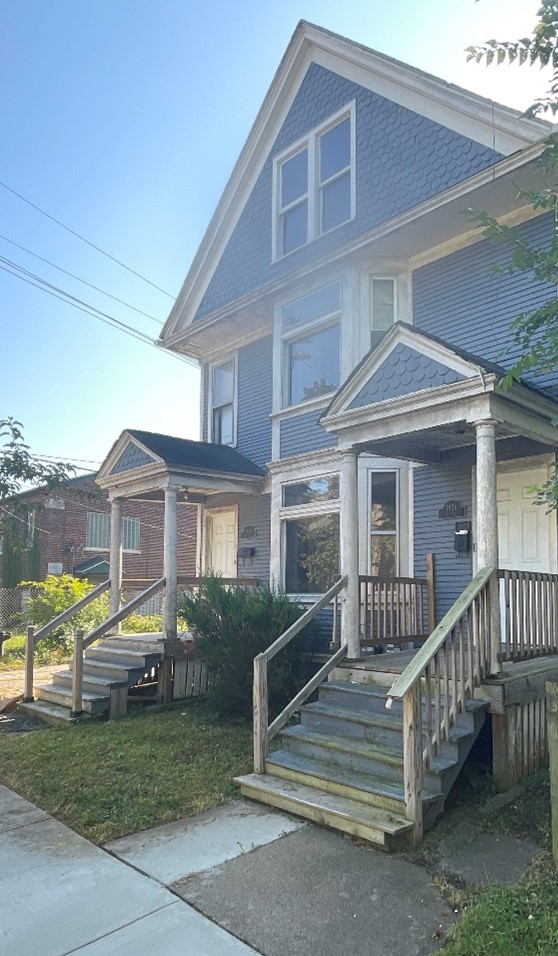
Where original wood siding remains, it should be repaired and retained. Where wood siding was covered with more modern materials, noncompatible cladding should be removed, and the wood investigated to determine the feasibility of repair and rehabilitation. Where wood siding was removed, it is most appropriate to replace the siding using the same materials.
The Detroit Historic District Commission will consider applications for the replacement of wood siding using substitute materials on a case-by-case basis. Please see the National Park Service’s Preservation Brief 16 The Use of Substitute Materials on Historic Building Exteriors for additional information.
A variety of manufactured siding materials gained prevalence during the mid-20th century are and present within Detroit’s historic districts. Some of these materials (aluminum siding, for instance) may have been original to the property, but they often served as relatively inexpensive replacement siding. Many of these materials may have been added directly over the original siding. By removing small portions of replacement siding, a property owner can often see if original siding material remains underneath and assess the condition of that material.
Asphalt siding was developed during the second quarter of the 20th century as a replacement siding material. The most common form of asphalt siding was made to imitate brick, and is often referred to by the proprietary names Inselbric (or Insulbric). The composition of asphalt siding closely resembles traditional asphalt roofing shingles. Inselbric and similar products were almost exclusively used as replacement siding, and usually applied over the original materials. Asphalt siding is no longer manufactured. The removal of asphalt siding and rehabilitation of the original siding is generally the most appropriate treatment for buildings in historic districts.
Aluminum siding became a prevalent building material during the mid-20th century. It was often manufactured to imitate wood lap siding and was used both in new construction and as a replacement material. When aluminum siding was used as an original siding material, the most appropriate treatment is repair, or replacement in kind. If aluminum siding was installed as a replacement for wood or other historic material, restoring the original materials is recommended.
Vinyl siding became a popular material during the second half of the 20th century. The PVC based product is used in new construction, as well as applied over original siding materials. Vinyl siding is manufactured to imitate a wide variety of earlier materials, including wood lap and wood shake siding. However, vinyl siding is generally not appropriate for use in historic districts. The application of vinyl siding over original materials drastically alters the appearance of a property and can cause deterioration by trapping moisture behind the siding. In most cases, vinyl siding products do not adequately match the aesthetic characteristics of the materials they seek to imitate.